
Leer en Español
A Partner Spotlight — Refugee Community Partnership
When we talk about systems change, we often talk about strategy, funding, policy, and data. What we talk less about—and what matters most—is relationships.
As the National Program Office for this initiative, a grantee of the Robert Wood Johnson Foundation (RWJF), Community Solutions for Health Equity (CSHE) was designed from the start as a partner, not a funder. Since 2019, CSHE has operated from the belief that sustainable, equitable health systems transformation cannot be purchased, mandated, or engineered from the outside. These changes have to be grown through authentic connection, shared trust, and a genuine commitment to showing up for one another over time. Relationships are not just how CSHE does its work. They are the foundation of it.
Relationships as Strategy
In traditional philanthropic models, the relationship between funder and grantee follows a familiar script: funding is awarded, deliverables are tracked, and a report is filed. Power flows in one direction, and so does knowledge.
It’s important to clearly name what CSHE does.
As the National Program Office for this initiative, CSHE connects, supports, and aligns a network of community-based organizations working to transform health systems. We convene partners across regions and identities, provide technical assistance grounded in community knowledge, and create spaces for shared learning and strategy. We also support partners in strengthening their policy, narrative, and systems engagement so their work can influence institutions beyond the local level.
CSHE does not operate as a traditional funder. We do not set community priorities or determine how the work should be done. Our role is to strengthen the conditions that allow community leadership to drive systems change.
CSHE works alongside 11 community-based partner organizations across the country. Each partner brings its own identity, expertise, and community focus. Our role is to support and connect that work by strengthening relationships across communities, aligning strategy, and creating opportunities for collective learning. This is what national power building looks like in practice.
CSHE was designed to interrupt that pattern by centering relationships as a core strategy for systems change across its partnerships nationwide. The premise is simple and profound: if the goal is to transform health systems so they work for everyone, then the people closest to that harm must feel powerful enough to approach institutions with authenticity, grounded in their lived experience, to speak truth to power for systems change. Institutions must be willing to listen to the voices closest to the issues.
This means CSHE approaches every partnership as both student and teacher, moving at the speed of trust rather than the pace of a grant cycle.
This approach shows up in how we work alongside partners every day.
Spotlight: The Refugee Community Partnership
To understand what this looks like in practice, look to the Refugee Community Partnership (RCP), one of CSHE’s 11 funded partners, and a powerful example of what becomes possible when community organizations genuinely grow together.
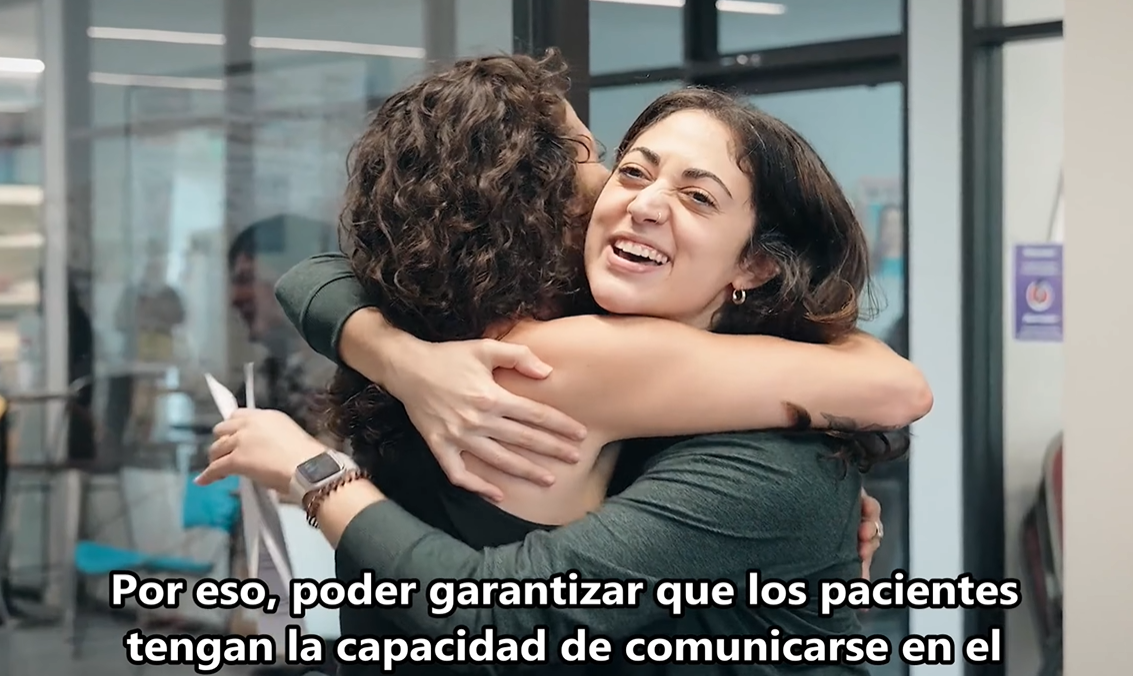
RCP’s work is anchored in language justice and immigrant rights. Their mission is grounded in a truth that is both simple and radical: you cannot access what you cannot understand. For refugee and immigrant communities, language barriers in healthcare settings are not a minor inconvenience; they are tangible walls. They determine whether a patient understands their diagnosis, can give truly informed consent, or can advocate for themselves in a moment of crisis. Language injustice is health injustice. Through this work, RCP is helping to shift how healthcare systems approach language access—not only by expanding interpretation and navigation support, but by influencing how institutions think about communication, consent, and patient engagement. These efforts are contributing to more responsive care models and stronger accountability to the communities they serve. RCP has dedicated itself to dismantling that injustice through community advocacy, language navigator training, policy engagement, and deep relational organizing. Through this partnership, CSHE has supported RCP by creating space for cross-network learning, strengthening connections to policy and systems leaders, and amplifying their work through national storytelling and strategy alignment.
Their work connects directly to CSHE’s mission to elevate diverse voices, histories, and cultures as the foundation of health equity.
This partnership offers important insight into how relationship-centered approaches can shape systems from within, demonstrating that trust, when built intentionally, can influence not only individual experiences but also institutional practices and decision-making.
A Partnership That Flows Both Ways
What distinguishes CSHE’s relationship with RCP is its intentional, bi-directional nature. This is not a relationship in which CSHE arrives with answers, and RCP receives them. Both organizations show up as full partners, each bringing knowledge the other needs, and remain open to being changed by what they learn.
You cannot elevate a voice that the system cannot hear. RCP has taught CSHE what language justice truly demands: that inclusion cannot be an afterthought, that accessibility must be designed from the inside out, and that communities whose realities have been rendered invisible must be treated not as beneficiaries of change, but as architects of it. In turn, CSHE’s sustained investment and collaborative infrastructure have given RCP the space to expand its reach, deepen its policy advocacy, and connect with peer organizations navigating adjacent struggles across the network.
This is bi-directional learning in practice: entering every space with humility, honoring community wisdom and institutional knowledge as equally valid, and remaining open to what we have yet to discover, and what we may need to unlearn.
Relationships Are the Infrastructure
Systems change requires funding, policy, research, and advocacy. But underneath it all are relationships. Trust is built over time, accountability is practiced, and there is a willingness to be shaped by the communities most impacted. Honesty offered and received, and a willingness to be changed by what you learn from people whose experience differs from your own.
CSHE treats relationships as a core part of how systems change happens. The partnership with RCP, and with every one of our partners, shows how this approach shapes how institutions engage with and respond to community-defined needs. When relationships are built with intention and accountability, they create the conditions for systems to shift in ways that last beyond a single grant cycle.
CSHE (Community Solutions for Health Equity)