
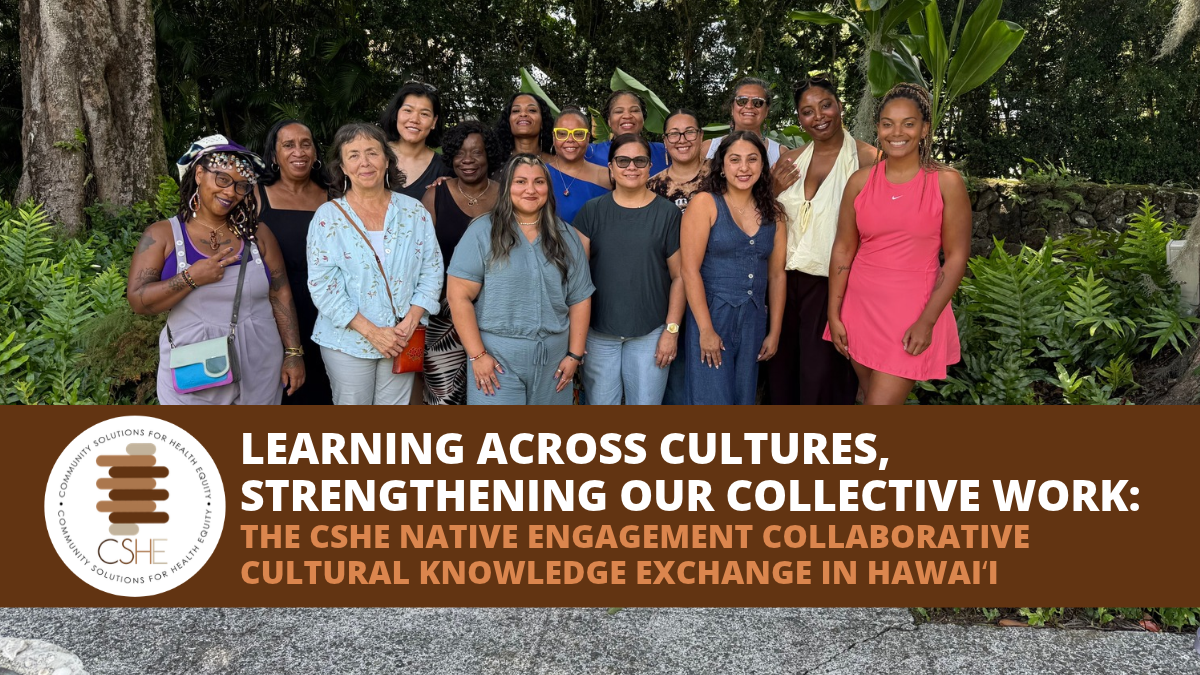
The CSHE Native Engagement Collaborative (NEC) recently traveled to Oʻahu, Hawaiʻi, for a Cultural Knowledge Exchange rooted in bi-directional learning, relationship-building, and multicultural solidarity. The NEC brings together Native, Latine, and Black leaders committed to advancing maternal child health, birth justice, and community wellness. This Cultural Knowledge Exchange connected NEC members with our partners at Breastfeeding Hawaiʻi. It created intentional space to exchange knowledge across cultures, histories, lived experiences, and community-rooted approaches to maternal child health while strengthening relationships that have been built through the Collaborative over time.
Building on the Birth Justice Knowledge Exchange with our partner, Southern Birth Justice Network, earlier this year, the Cultural Knowledge Exchange in Hawaiʻi continued the Collaborative’s learning around culturally grounded approaches to maternal child health and birth justice. It also deepened opportunities for members to share their cultures, histories, and community knowledge.

The Cultural Knowledge Exchange began with an opportunity to experience Native Hawaiian history, storytelling, music, and traditions at the Mauka Warriors Luau, grounding participants in the culture and history of the place that would shape their time on Oʻahu.
Breastfeeding Hawaiʻi then welcomed NEC members into a deeper exchange of knowledge around maternal child health. Participants learned about the organization’s programs and services to support breastfeeding families, the barriers families face within Hawaiʻi’s healthcare system, and community-centered approaches to breastfeeding and lactation care. Understanding that postpartum is a lifelong journey, Breastfeeding Hawaiʻi underscored the importance of continued care, connection, and support beyond the period immediately following birth. The conversation also brought greater understanding to the realities of accessing healthcare across the Hawaiian Islands, including the need for some families to travel to other islands to receive certain types of care. These conversations allowed members to exchange expertise, connect experiences across communities, and consider how culturally grounded approaches can strengthen maternal child health and advance health justice for entire communities.

Cultural and historical learning remained an important part of the Knowledge Exchange. Visits to ʻIolani Palace and the Queen Emma Summer Palace deepened participants’ understanding of Hawaiʻi’s history, monarchy, leadership, and cultural heritage. At the Queen Emma Summer Palace, participants learned about Queen Emma’s legacy and commitment to the Hawaiian people, including her leadership in public health and her role in establishing The Queen’s Hospital. These historic places offered important context for understanding the connections between history, culture, leadership, and health in Hawaiʻi.

The Knowledge Exchange continued at Waimānalo Health Center, where participants learned how Native Hawaiian values, culture, and connection are integrated into community health. The health center brings Native Hawaiian healing practices together with Western medicine as part of its commitment to holistic care. This approach recognizes the interconnected health of the individual, ʻohana (family), community, and ʻāina (land, that which nourishes and sustains life). During a guided walking tour of the health center’s garden, participants learned about plants used for healing and the center’s “FARMacy” approach, reflecting the role of food, plants, and the land in supporting health and wellness. Participants also visited the WIC center to learn more about services available to women, infants, and families.
The day at Waimānalo was grounded in reflection and connection. During a welcoming circle, participants honored their ancestors by sharing someone who holds significance in their lives and carrying their legacy into the space. The day concluded with a closing circle, giving NEC members an opportunity to reflect on the Cultural Knowledge Exchange and what they had learned from one another.
Together, these experiences reflected the purpose of the Native Engagement Collaborative: grounded in indigeneity and multicultural solidarity, the Collaborative creates space for leaders across cultures and communities to build relationships, share learning and expertise, and carry that learning back to their communities to advance health and systems transformation.
Rooted in the CSHE Praxis Model, the Cultural Knowledge Exchange brought bi-directional learning to life as NEC members and Breastfeeding Hawaiʻi moved through the experience as both students and teachers. CSHE also supports funded partner organizations like Breastfeeding Hawaiʻi, helping to sustain community-rooted work that responds to the priorities and needs of their communities.
The CSHE Native Engagement Collaborative continues its collective work with strengthened relationships, new perspectives, and shared knowledge that can inform the work within their communities and strengthen approaches to maternal child health. By investing in programs, partnerships, community leadership, and opportunities for shared learning, CSHE helps create the conditions for collective action that advances health justice and systems transformation.